What are correctives in skincare? Why are they important & how do we best use them?

In ancient Egypt, a peculiar condition ran rampant among its citizens. Many Egyptians could not see well at night. Not completely blind, but their eyes could not adapt to low-light conditions. Today, we call this condition ‘nyctalopia’ or night blindness, and we would later learn that Vitamin A deficiency is the root cause of nyctalopia.
In 1909, scientists Elmer McCollum and Marguerite David identified a fat-soluble factor in butter and egg yolks that was necessary for life and called it Vitamin A.
About 25 years later, another scientist named Paul Karrer successfully isolated and produced a vitamin A derivative from fish oil and called it RETINOL. This was such a monumental scientific feat that he won the Nobel Prize for his discovery.
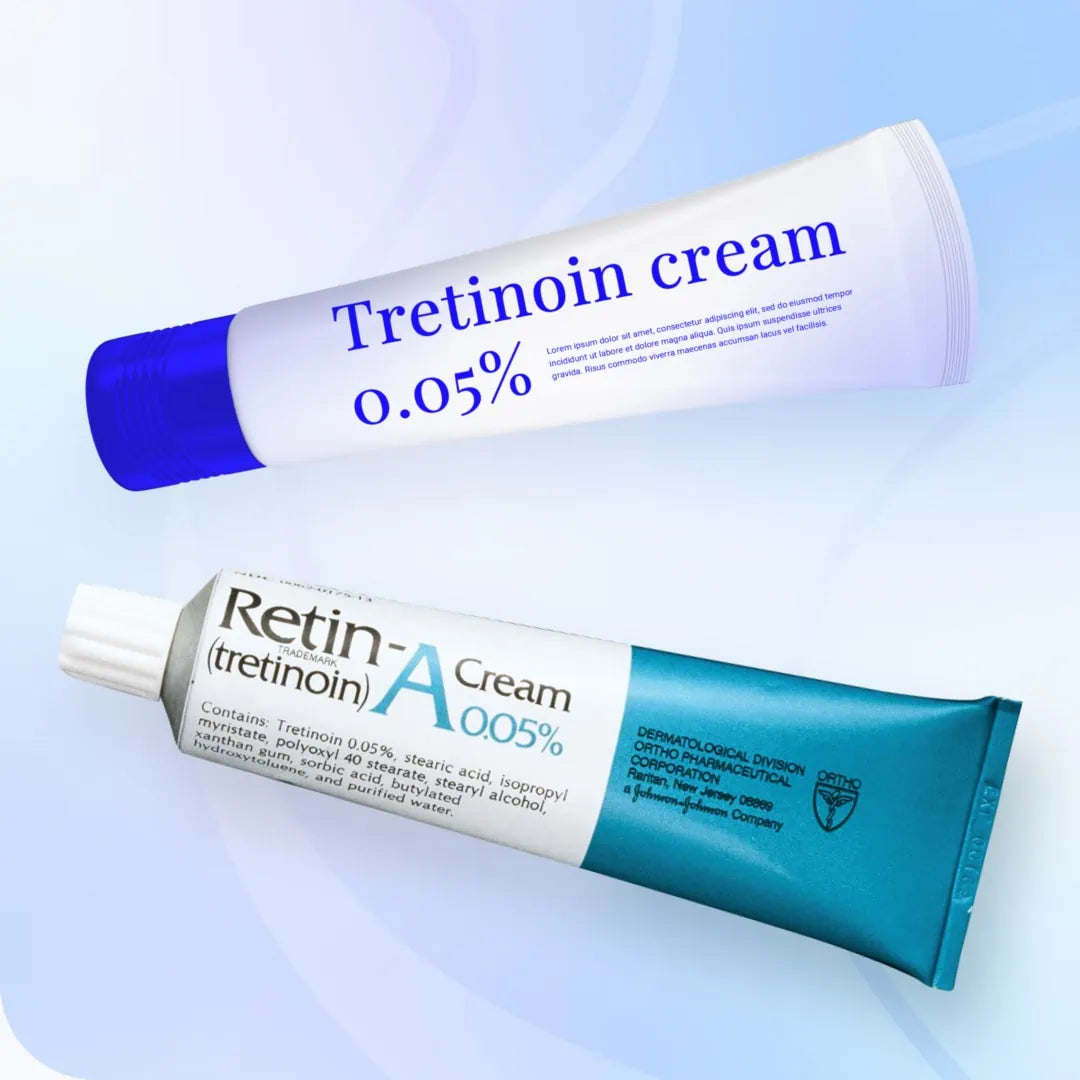
Fast forward to late the late 1960s and Doctors Albert Kligman and James Fulton discovered that vitamin A was very effective for treating acne caused by clogged pores. But in the midst of this trial, they also noticed something unexpected. The patient's skin was becoming smoother, firmer, and less wrinkled. Thus was born Tretinoin, pure retinoic acid, marketed until today as Retin-A.
That was a fun walk down memory lane, but what was my objective in sharing the history of retinoids? Retinol, Retinoic Acid and now Retinal (all derivatives of vitamin A) are considered the first topical correctives.
Correctives are important in skincare because they are the concentrated active ingredients that address (basically reverse) specific skin concerns. Correctives, by nature are powerful and effective BUT they are also inflammatory and we’ll address how best we can use correctives later on.
For the purpose of this paper, I’ll discuss the following correctives, what they do, why they’re important and how best to stack them together.
Retinal (an evolved form of retinol, vitamin A)
Ascorbic Acid (vitamin C)
Niacinamide (Vitamin B3)
Azelaic Acid
Beta Hydroxy Acid (BHA)
Alpha Hydroxy Acid (AHA)
Tranexamic Acid
Alpha Arbutin
Peptides
Let’s start with retinoids, the tried and true gold standard
MRetinal (vitamin A)
Retinal (short for retinaldehyde) is the immediate precursor to retinoic acid, occupying a unique "sweet spot" in the Vitamin A hierarchy because it is only one conversion step away from the form your skin can actually use. While standard retinol must be converted twice, first to retinal, then to retinoic acid, retinal skips a step, allowing it to deliver clinical results up to 11 times faster without significantly increasing irritation.
It basically gives your skin cells a friendly "hurry up," boosting collagen and clearing out pores, and it even has a natural antibacterial kick that’s great for keeping breakouts at bay.
Ascorbic Acid (vitamin C)
L-ascorbic acid is the "purest" and most hardworking form of Vitamin C that you can give your skin. It’s a multitasker that acts like a tiny, protective shield, neutralizing "free radicals" before they can cause damage. Because it’s the biologically active form, your skin doesn’t have to wait to convert it, it gets straight to work brightening up dark spots and giving your cells the "green light" to produce more bouncy collagen. It’s incredibly effective because it’s a gold-standard antioxidant that leaves you with that sought-after "lit-from-within" glow while helping your sunscreen work even harder.
Did you know?
Watch out for serums that have derivatives of ascorbic acid, like ascorbyl acetate, phosphate, palmitate, etc. They help stabilize vitamin C in serum but are not considered immediately “biologically active” and so they are not as effective if at all.
Niacinamide (vitamin B3)
Niacinamide is the ultimate "team player", the most versatile corrective that binds other correctives together. It works by strengthening your skin’s natural barrier, essentially patching up the "mortar" between your skin cells to keep hydration locked in and irritants out. It’s incredibly effective at calming down redness, shrinking the appearance of pores, and balancing oil production, making it a rare gem that works for both dry and oily skin types. Because it’s so gentle yet helps with everything from fading dark spots to smoothing fine lines, it’s basically the steady, reliable best friend of the skincare world that plays well with almost every other ingredient in your routine.
Glycinated Azelaic Acid
The skin’s ultimate "peacekeeper." Naturally found in grains like barley and rye, this clever ingredient works by gently calming down overexcited skin and telling redness-causing cells to take a deep breath. It’s a multitasker: it acts as a mild exfoliant to keep pores clear, a brightener that specifically targets stubborn dark spots without messing with your normal skin tone, and an antibacterial powerhouse that kills bacteria that cause acne. It’s so effective because it’s incredibly gentle yet remarkably tough on issues like rosacea and acne, making it the perfect go-to for anyone who wants a clearer, more even complexion without the irritation of harsher acids.
Beta Hydroxy Acid / Alph Hydroxy Acid (BHA/AHA)
Most common BHA you’ll find is Salicylic acid while the two most common AHAs you’ll find are lactic acid and glycolic acid. AHAs are water-loving experts that work on the surface, gently dissolving the "glue" that holds dead skin cells together exfoliate dead skin layers from the surface of our skin.
BHAs bind with oil and will dive deep into your pores to clear out gunk and excess oil, making them the best exfoliant for anyone dealing with blackheads or breakouts.
For proper exfoliation, you need both - exfoliate deep and wide.
Did you know?
AHAs and BHAs are most effective when formulated together in their purest form as an exfoliant because that is their core function.
You will find glycolic acid in serums and creams, but this reduces the efficacy and strength of these correctives.
Tranexamic Acid
Tranexamic acid is a proven corrective for treatin hyperpigmentation. But this corrective works differently from vitamin C or azelaic acid. It works by blocking the signal connection between the enzyme tyrosinase and the melanocytes. In other words, it works by interrupting the pathway that tells your pigment-producing cells to go into overdrive, making it incredibly effective at fading stubborn melasma, sun spots, and those lingering red marks left behind by old breakouts.
Alpha Arbutin
Derived from the bearberry plant, it works by slowly releasing a small amount of hydroquinone-like activity into the skin to put the brakes on "tyrosinase," the enzyme responsible for creating dark spots. Instead of being harsh or aggressive, it essentially whispers to your pigment-producing cells to calm down, making it incredibly effective at fading sun damage, age spots, and acne scars. It shows all the benefits of hydroquinone without any of its side effects.
Peptides
Think of peptides as the "personal trainers" for your skin cells. They are short chains of amino acids that act as messengers, sending specific signals to your skin to kickstart its natural repair processes. When you apply them, they trick your skin into thinking it’s lost collagen, which prompts your cells to get back to work building more of that "bouncy" support structure we all love. They are incredibly effective because, unlike some heavy-hitting actives, they are super gentle and focus on long-term strength, firming things up, smoothing out fine lines, and reinforcing your skin’s moisture barrier. It’s essentially a way to tell your skin to act

The Best Way to Stack These Correctives
For anti-aging and wrinkles
Stack protocol: Retinal - Niacinamide - ascorbic acid
To stack these 3 correctives effectively, we’ll need to play to their strengths by splitting them between day and night routines.
Once you cleanse/tone, apply niacinamide first, then apply vitamin C during the day. You must apply sunscreen here because vitamin C will oxidize almost immediately when it hits UV light. At night after cleanse/tone, apply niacinamide first, then apply retinal. The layer of niacinamide will help blunt the initial irritation of retinal on bare skin, allowing retinal to be absorbed evenly over time.
What to avoid:
When using retinal, we do not want to introduce AHA or BHA. AHA/BHA have the same skin-stripping action as retinol and can lead to inflammation that backfires.
Saranghae Products
Saranghae NiaRetin Complex Duo
Saranghae Advanced Dark Spot Repair Serum
For Hyperpigmentation
Stack Protocol: Ascorbic acid - Glycinated Azelaic Acid - Niacinamide - Alpha Arbutin - Tranexamic acid
Saranghae Products
Saranghae Blemish & Skin Spot Corrective Duo
Night/Day Routine
1 - cleanse/tone
2 - apply azalume 10 serum first THEN apply 25% vitamin C serum
3 - heal/moisturize
4 - sunscreen (for day routine only)
Similar to night but must wear sunscreen. I would recommend using it only at night first so that your skin can get acclimated to the correctives.
For Acne/oily/textured skin
Stack Protocol: AHA/BHA - retinal - azelaic acid
Saranghae Products
Saranghae 2% AHA/BHA Pore Minimizing Exfoliant
Saranghae Azalume 10 serum
Saranghae 0.1% Retinal Serum
Night Routine
1 - cleanse
2 - AHA/BHA / then tone (start AHA/BHA once a week then work up)
3 - apply azalume 10 serum then 0.1% retinal serum (start retinal once every 2nd or 3rd day)
4 - heal/moisturize
IMPORTANT: On the days you apply 2% AHA/BHA, please do not apply retinal. These two correctives do not play well together.
For day routine, always finish off with sunscreen
Lastly, because peptides are gentle and non-inflammatory, one can apply them for every scenario and in fact, I would recommend applying peptides to every skincare routine. You can apply a peptide serum before the inflammatory correctives to “blunt” absorption or afterward to calm inflammation.
This mini-guide is by no means a completed list but it’s a great start to understanding and utlizing correctives. And remember that there is never only one way to utilize correctives. Because we’re all unique, we will inevitably start to create our own unique variations on using correctives within a skincare routine.
If you have any particular questions about correctives, how to combine them or what a full skincare routine would look like with correctives, please don’t hesitate to reach out at myroutine@lovesaranghae.com
I hope you enjoyed this article, until next time.
My warmest regards
Peter Lee
Co-founder, CEO
Saranghae | Orora
Ask Our Skincare Consultant
If you've got questions about skincare, we've got answers! Navigating the world of skincare can be overwhelming; that's why we're giving you a direct line to our experts.
Let our trained consultants provide you with the knowledge, advice and tips to help you get the most out of Saranghae skin care routines.
Simply Click on the button below to ask your question.