Addressing hyperpigmentation requires a multi-targeted approach because pigment production (melanogenesis) happens in several distinct stages.
Here is a breakdown of five of the most effective corrective ingredients, including what they are, how they function, and why they work, followed by how they collaborate to clear your skin.
25% L-Ascorbic Acid
What it is: An ultra-high concentration of pure, active Vitamin C.
How it works: At a potent 25%, it aggressively inhibits the tyrosinase enzyme by interacting with copper ions at the enzyme's catalytic site, shutting down the initial chemical trigger that converts tyrosine into melanin.
Why it's effective: This maximum-strength concentration acts as a powerful antioxidant shield. It floods the skin to neutralize free radicals from UV rays and pollution, which are the primary triggers for melasma and sun spots.
Because L-ascorbic acid can be difficult for the skin to absorb, a 25% ceiling ensures a massive, biologically active payload penetrates deep enough to kickstart rapid brightening.
10% Glycinated Azelaic Acid
What it is: A water-soluble derivative of azelaic acid bound with the hydrating amino acid glycine (often known as Potassium Azeloyl Diglycinate).
How it works: It targets and selectively inhibits hyperactive melanocytes (abnormal, over-producing pigment cells) without affecting normal skin pigmentation, while the glycine component intensely hydrates and regulates sebum.
Why it's effective: Standard azelaic acid can be chalky and irritating at 10% or higher. This glycinated form delivers the same powerful anti-inflammatory and tyrosinase-inhibiting benefits, making it a holy grail for Post-Inflammatory Hyperpigmentation (PIH) from acne, but with superior absorption, zero irritation, and a significant boost to the skin barrier.
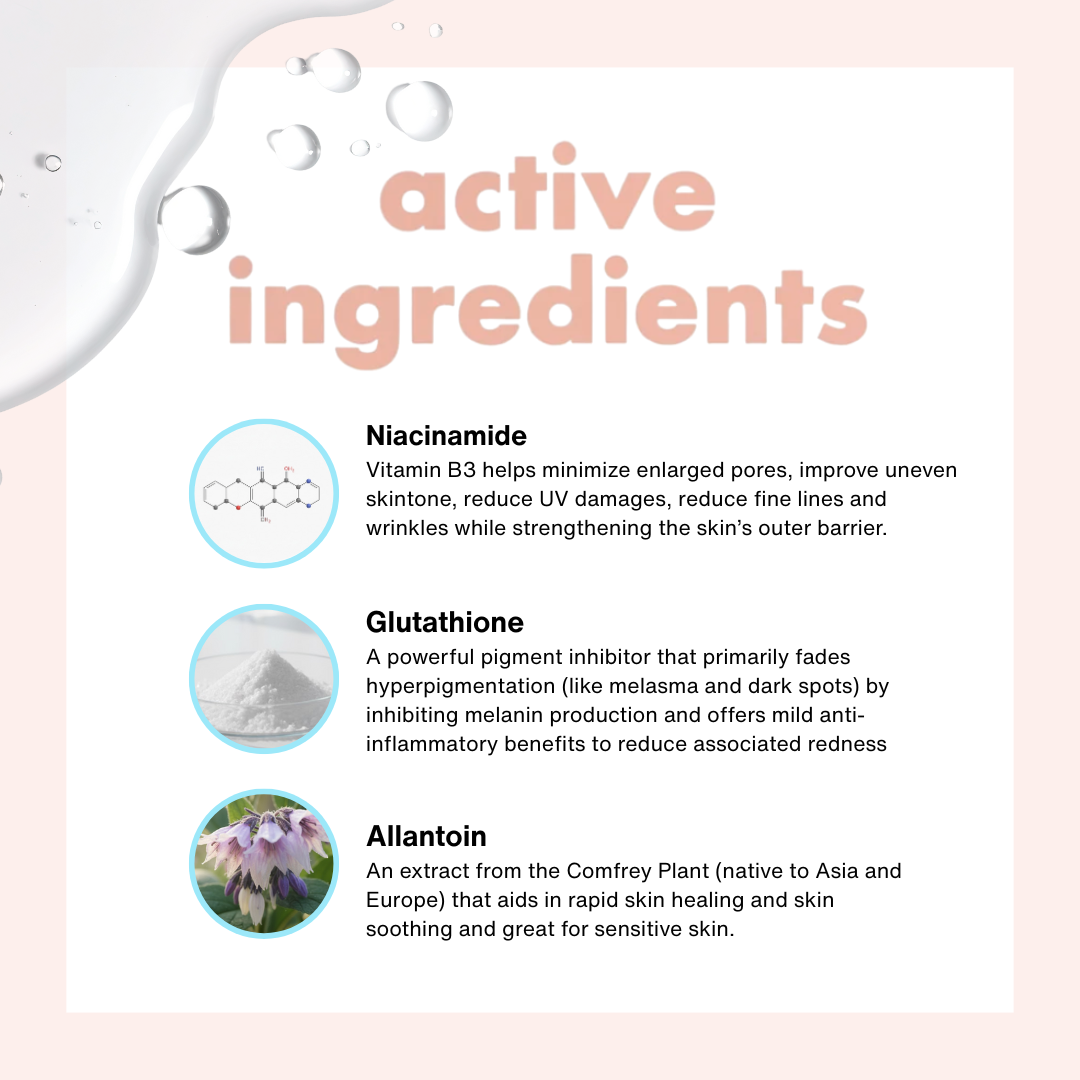
2% Niacinamide
What it is: A clinically backed, moderate concentration of Vitamin B3.
How it works: It acts as a traffic controller later in the pigment pathway. Instead of stopping melanin from being made, it prevents the melanosomes (pigment packets) from being transferred from the deep melanocytes into your upper skin cells (keratinocytes).
Why it's effective: While higher percentages (10%+) exist, a 2% concentration is the exact sweet spot for inhibiting pigment transfer without overwhelming the skin. It acts as an invisible barrier, ensuring that even if your skin tries to make pigment, that pigment can never actually reach the surface to become a visible dark spot.
1% Tranexamic Acid
What it is: A synthetic derivative of the amino acid lysine, originally used in medicine to stop bleeding, now prized in dermatology.
How it works: It blocks the pathway between damaged surface skin cells (keratinocytes) and pigment cells (melanocytes). Specifically, it inhibits the plasminogen/plasmin system, which is triggered by UV light or inflammation.
Why it's effective: At 1%, it is incredibly effective at treating melasma and stubborn, red-brown vascular discoloration. By calming the underlying inflammatory network that constantly "orders" the skin to produce pigment, it stops chronic, stubborn hyperpigmentation at its hormonal and inflammatory root.
1% Alpha Arbutin
What it is: A natural derivative of hydroquinone extracted from bearberry plants.
How it works: It functions as a safe, slow-release tyrosinase inhibitor. It mimics tyrosine (the amino acid needed to make pigment) to trick the enzyme into binding with it instead, effectively blocking the production line.
Why it's effective: At 1%, Alpha Arbutin delivers the powerful pigment-fading results of hydroquinone but without the risk of cellular toxicity or rebound hyperpigmentation. It is exceptionally stable and works fast to fade sun damage, age spots, and uneven patches.
The MAGIC is how they work synergistically to create: THE COMPLETE LOCKDOWN
This specific formulation creates a highly efficient, multi-tiered defensive strategy. When these five ingredients are combined, they attack hyperpigmentation at distinct biological stages simultaneously, leaving no loopholes for pigment to form.
The Double Lock on Production:
25% L-Ascorbic Acid and 1% Alpha Arbutin work in tandem to attack the tyrosinase enzyme from two different structural angles. This "double-locking" mechanism makes pigment production incredibly difficult.
The Inflammatory Brake: While Vitamin C handles oxidative stress, 1% Tranexamic Acid and 10% Glycinated Azelaic Acid shut down the inflammatory signals caused by acne, heat, and UV. They stop the "panic response" in the skin that causes stubborn melasma and red-brown acne scars.
The Final Interception: For any stray pigment that manages to bypass the heavy blockers above, 2% Niacinamide stands guard at the final gate, refusing to let the pigment transfer to the surface layer of your skin.
The Final Result?
Because this blend tackles the root cause, the production, the transfer, and the resulting inflammation all at once, it fades hyperpigmentation much faster and more permanently than any single high-dose ingredient could on its own.
NOTE: Any hyperpigmentation skincare routine needs to end with a sunscreen during the daytime.


 (for one time purchases only)