Peptides, Retinoids, Exosomes: What They Are and Why They Matter

If you’ve ever hosted a booth at a tradeshow, then you know my pain. 10 hours a day on your feet, ankles swollen, and words melding together to create a new language that sounds somewhat like English, French, Korean, and gibberish.
But after hours of discussing the details of skincare ingredients at a National Women’s Show recently, I realized that 99% of skincare lovers are curious but confused about the latest salvo of ingredients social media is talking about - especially those in Korean skincare.
So I’m going to take the next 5 minutes and discuss the details of 3 key ingredients that are making some noise today, how they differ, and their use cases:
Peptides
Retinoids
Exosomes
Let’s start with retinoids, the tried and true gold standard
MThe undisputed heavyweight champion (mostly because they’ve been around since the 1940s). Retinoids are derivatives of Vitamin A, and they have been the "Gold Standard" in dermatology for decades.
If skincare had a Hall of Fame, Retinoids would be the first inductee.
What the heck are they?
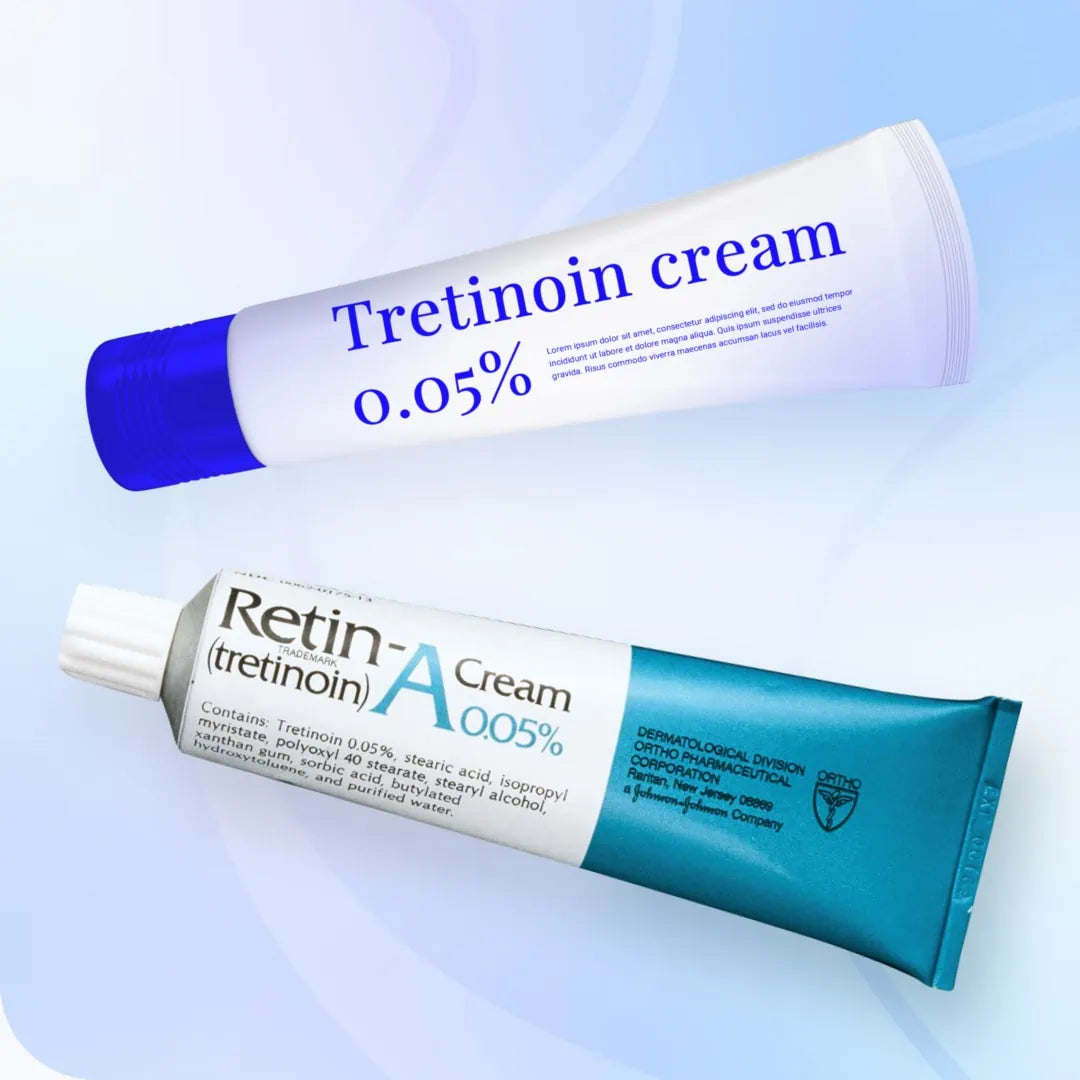
“Retinoids” are a catch-all word that includes all forms and derivatives of retinoic acid - the active ingredient that we’re looking for. The most common is retinol, retinal is the newest derivative and retinoic acid (like tretinoin) is the most powerful. They work by communicating with your skin cells on a structural level. Essentially, they tell your skin cells to "hurry up." They speed up cell turnover, the process where your skin sheds old, dead cells and replaces them with fresh, bouncy ones.
Why should you care?
Retinoids are the ultimate multitaskers. They:
Boost Collagen: By stimulating the fibroblasts in your skin, they help reduce the appearance of fine lines and wrinkles.
Clear Pores: They prevent dead skin cells from clogging pores, making them a secret weapon against acne.
Even Out Tone: They help fade sunspots and hyperpigmentation.
The Catch:
Retinoids can be "spicy." Because they force your skin to work harder, they often cause a period of "purging," dryness, or peeling. For sensitive skin, it may just be too much where the inflammation is prolonged and damaging to skin overall.
It also doesn’t address the root cause of lines and wrinkles: the degradation of the collagen/elastin matrix that supports the outer layers of our skin.
How To Use:
First, go with retinal (as opposed to retinol) because it delivers a stronger skincare effect with much less irritation. Start slow, every other day or every third day is a good start. Only at night and after about 45 to 90 days, cycle off to give your skin a reset.
Retinoids will work best when incorporated into a skincare routine that will calm down the inflammation of the retinoid.

Peptides: The Gentle Messengers
If Retinoids are the drill sergeants of skincare, Peptides are the polite couriers. They aren't as aggressive, but they are incredibly smart.
Peptides are short chains of amino acids that serve as the building blocks of proteins like collagen, elastin, and keratin. In skincare, they act as signal molecules. When you apply peptides to your skin, they "trick" the body into thinking there is a breakdown in collagen. Your skin responds by saying, "Oh no! We need to make more!" and starts the repair process.
Why should you care?
Peptides are the perfect partner for someone who wants anti-aging results without the irritation of Retinoids.
Firming & Plumping: They help restore the "snap" to your skin.
Barrier Support: Unlike Retinoids, which can temporarily weaken the skin barrier, Peptides actually help strengthen it.
Specific Targeting: There are "Neuropeptides" (like Argireline) that are often called "Botox in a bottle" because they can subtly inhibit the muscle contractions that lead to expression lines.
The Catch:
Peptides are subtle. You won’t see a dramatic change overnight. They work in the background, reinforcing your skin’s foundation over time. They are excellent for maintenance and for those with sensitive skin who can’t handle Vitamin A.
How To Use:
With peptides, it’s all about consistency and longevity. Consider them as part of your skincare practice and over time, the incorporation of peptides will yield excellent results and benefits.
Our Orora Bioactive Collagen System features multiple peptides in high concentrations.

Exosomes: The Cutting Edge "Cellular Package"
Now we move into the territory of regenerative medicine. If you want to feel like you’re living in the year 3000, let’s talk about Exosomes. This is currently the most exciting topic in professional skincare.
What the heck are they?
To understand Exosomes, you have to understand how cells talk. Imagine your cells are all living in a giant city. They need a way to send packages to one another. Exosomes are those packages.
Technically, they aren't "cells", they are tiny extracellular vesicles (bubbles) released by cells. They are packed with "cargo" like growth factors, lipids, and messenger RNA. When an Exosome from a healthy, "young" cell travels to a damaged or aging cell, it delivers the instructions on how to repair itself. It’s literally "youth" in a delivery system.
Why should you care?
Exosomes are a leap forward in healing. While Retinoids and Peptides stimulate the skin to do its own work, Exosomes provide the specific instructions and materials to do that work more efficiently than ever before.
Rapid Recovery: They are incredible for post-procedure healing (after microneedling or lasers).
Inflammation Control: They are naturally anti-inflammatory, making them great for calming redness.
Deep Regeneration: They can address deep-seated aging concerns that topical creams often struggle to reach.
The Catch:
Access and Price.
Most high-potency Exosome treatments are done in a professional clinic (often as a topical add-on after a treatment). While some "at-home" Exosome serums are hitting the market, the technology is expensive, and we are still learning which sources (plant-based vs. synthetic vs. human-derived) are the most effective.
The other question is whether exosomes are suited for daily use or for spot treating. There is some evidence to suggest that using exosomes regularly does not add any more value than using in every once in a while.
And that’s what we know today. The science is evolving around peptides and exosomes so it’s important to check in with the data from time to time.
But that’s what we’re here for. We do the research so you don’t have to! 🙂
I’m sure you have some questions so please don’t hesitate to ask (you can click here to submit your questions).
Until next time, I wish you my warmest regards
Peter Lee
Co-founder, CEO
Saranghae | Orora

Ask Our Skincare Consultant
If you've got questions about skincare, we've got answers! Navigating the world of skincare can be overwhelming; that's why we're giving you a direct line to our experts.
Let our trained consultants provide you with the knowledge, advice and tips to help you get the most out of Saranghae skin care routines.
Simply Click on the button below to ask your question.